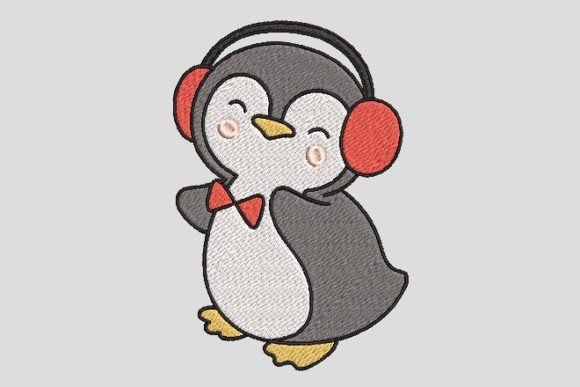
Reviewing Christmas Cute Penguin for Branded Merch
As an embroidery designer who has spent years digitizing files and consulting with small business owners, I approach every new machine embroidery design with a critical eye. It is not enough for a motif to simply look adorable on a screen; it must perform under the needle, withstand industrial washing, and elevate the brand identity of the client using it. Today, I am reviewing Christmas Cute Penguin, a seasonal asset that promises to embellish fabrics with whimsy and charm. For boutique owners, Etsy sellers, and local businesses looking to capitalize on holiday traffic, this review breaks down how this design functions in real-world commercial applications.
First Impressions: Visual Personality and Brand Fit
The immediate impression of Christmas Cute Penguin is one of approachable warmth. In the crowded marketplace of holiday decor, brands often struggle to balance professionalism with festivity. This design leans heavily into the playful and decorative spectrum. It feels handmade and friendly, which is ideal for businesses that rely on personal connection, such as bakeries, florists, pet brands, or creative studios. However, for corporate entities seeking a stark, minimalist aesthetic, this penguin might feel too soft. The key here is alignment. If your brand voice is cozy, community-focused, and family-friendly, this design serves as a perfect visual ambassador.
When evaluating the description, which notes that the design comes with various formats (implied by the cut-off text "comes with mu"), we must assume versatility. A professional embroidery file should offer multiple sizes to accommodate different hoop capacities. Before committing to a bulk order of merchandise, always verify the included hoop sizes to ensure they match your machine’s capabilities.
Commercial Applications for Small Business Merch
The true value of a digital embroidery file lies in its adaptability across product lines. Here is how Christmas Cute Penguin performs in specific business scenarios:
- Embroidered Patches: This is perhaps the strongest use case. A well-digitized penguin can be stitched onto twill or felt backings to create iron-on or sew-on patches. These can be sold as standalone accessories or used to upgrade plain beanies and jackets, increasing the perceived value of the finished product.
- Staff Uniforms and Aprons: For cafés and boutiques, holiday uniforms drive customer engagement. Stitching this design on the chest pocket of an apron or the sleeve of a work shirt adds a touch of seasonal spirit without overwhelming the professional look. It signals to customers that the staff is festive and ready to serve.
- Tote Bag Design: Canvas tote bags are staples for handmade brands. Placing the penguin centrally or as a corner accent transforms a generic bag into a limited-edition holiday item. Ensure you use a heavy-duty stabilizer to prevent puckering on the coarse fabric texture of canvas.
- Cap Embroidery: Curved surfaces are tricky. If the design includes fine details, it may get lost on the curved front panel of a baseball cap. It works best if simplified or if the cap has a large, flat front panel. Always test stitch on a dummy cap before running a full production batch.
Navigating Technical Challenges and Fabric Constraints
While the charm of Christmas Cute Penguin is undeniable, technical execution requires caution. Small business owners must consider stitch density and thread colors. High stitch density can lead to fabric distortion, especially on lightweight materials like thin cotton towels or silk blends. If the design is dense, you must use a cut-away stabilizer rather than tear-away to maintain structural integrity.
Furthermore, consider the contrast. If you are stitching on dark uniforms, such as navy or black chef coats, ensure the thread colors pop. A penguin is naturally black and white, which offers high contrast, but if the design includes red scarves or green hats, verify that these threads do not bleed into each other during high-speed stitching. Test it in black and white first to check the clarity of the outlines. If the details blur when stripped of color, the design may be too complex for small patch sizes.
Another critical factor is washability. Items like towels and aprons undergo frequent, rigorous washing. Ensure that the satin stitches used in the design are tight enough to resist snagging but not so tight that they perforate the fabric. Always wash a test sample to check for thread shrinkage or color fastness before delivering the final product to a client.
Enhancing Brand Identity and Customer Trust
Consistency in design assets builds trust. When a customer sees the same high-quality Christmas Cute Penguin on your website’s printable mockup, your social media posts, and the actual physical product, it reinforces brand reliability. A sloppy embroidery job can damage reputation, while a crisp, clean stitch pattern enhances the perceived quality of your handmade product.
For Etsy sellers and crafters, this design can serve as a signature element. By using it consistently across your holiday collection—perhaps on pillows, home decor, and gift tags—you create a cohesive visual narrative. This recognition drives buyer engagement and encourages repeat purchases. Customers are not just buying a towel; they are buying into the whimsical, charming experience your brand provides.
Practical Designer Notes for Production
Before you launch your marketing campaign or start stitching hundreds of units, follow these practical steps:
- Verify Licensing: The description mentions it is a machine embroidery design, but always confirm the commercial license terms. Ensure you are allowed to sell physical items made with this file.
- Create a Mockup: Use a printable mockup to visualize the design on different products. This helps in client approval processes and ensures the scale is appropriate for the intended item.
- Check Spacing and Hoop Size: Confirm that the design fits within your standard hoop size without requiring excessive re-hooping, which can cause misalignment.
- Test on Real Fabric: Never skip the test stitch. Run the design on the exact fabric type you plan to use for production. Check for puckering, thread breaks, and registration issues.
- Evaluate Thread Colors: Match the digital thread colors to your physical inventory. If you need to substitute colors, ensure the new palette maintains the design’s readability and charm.
In conclusion, Christmas Cute Penguin is a viable asset for small business merchandising, provided it is applied with technical precision. It excels in creating emotional connections through its playful aesthetic, making it ideal for branded patches, aprons, and holiday gifts. By respecting the limitations of fabric texture and stitch density, and by maintaining rigorous quality control, you can transform this digital file into a profitable component of your holiday inventory. Remember, the difference between a good product and a great brand lies in the details of the stitch.